亚历山大·杜金:在后全球化时代,中俄印同属于“第二世界”

2022-06-15 -【导读】 编者按:在全球化浪潮接近尾声,国际格局进入变革时期的背景下,杜金试图借鉴冷战时期的“三个世界”理论,探讨未来的多极世界理论。本文为第一部分。




2022-06-15 -【导读】 编者按:在全球化浪潮接近尾声,国际格局进入变革时期的背景下,杜金试图借鉴冷战时期的“三个世界”理论,探讨未来的多极世界理论。本文为第一部分。
2022-09-28 -【导读】 俄罗斯沙皇格勒电视台于近日发布了一篇亚历山大·杜金的文章,他在文中指出,“我们正处于第三次世界大战的边缘,西方执着地将我们推向战场”。杜金表示,俄罗斯在哈尔科夫大撤退后有必要进行综合的考虑。俄罗斯必须竭尽全力,对包括思想、军事力量、经济、文化、艺术等所有领域乃至个人进行广泛动员,才能够在与西方的斗争中获胜。

Un trait caractéristique de la philosophie russe, selon certains historiens de la philosophie russe, est l'ontologisme de la pensée. La position de l'ontologisme en philosophie, contrairement à la position opposée du gnoséologisme, implique la considération primordiale non pas du processus de la pensée, mais de l'objet de la compréhension. Étant du côté de l'ontologique, nous cherchons avant tout à identifier et à répondre à la question : "QUOI est, QUOI est l'objet de notre connaissance, QUOI est le centre de notre intuition intellectuelle".
Bu Ukrayna ile bir savaş değil. Bu, bütünsel bir gezegen fenomeni olarak küreselleşmeyle bir yüzleşmedir. Jeopolitik ve ideolojik olmak üzere her düzeyde bir yüzleşmedir.
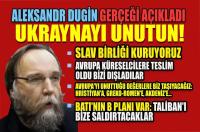
Rus milliyetçi entelektüellerin yeni internet sitesi zavtra.ru'daki son yazısında Aleksandr Dugin, Rusya'nın Ukrayna üzerindeki niyetlerini tüm çıplaklığıyla açıkladı. Dugin'i göre artık Ukrayna Doğu Slav Birliği'nden ayrılamayacak.... Batının B planı terörizm... Afganistan'dan ABD'nin ayrılması Taliban'ı güçlendirip bize güneyden saldırtmak için!..

Para comprender la transformación del orden mundial que está aconteciendo ante nuestros ojos, sobre todo el proceso de cambio de un modelo unipolar (globalista) a uno multipolar, es necesario recurrir a diversas ideas y conceptos que permiten realizar una explicación coherente de la misma. He propuesto mi propia visión del asunto en libros como Teoría del mundo multipolar y La Geopolítica del mundo multipolar, pero estas son solo aproximaciones a un tema bastante complicado. En este artículo quiero desarrollar tres conceptos que pueden ayudarnos a comprender mucho mejor el proceso de transición que está teniendo lugar en las Relaciones Internacionales. Creo que estos conceptos explican las tendencias, conflictos y problemas que se producen actualmente, como, por ejemplo, los conflictos en Ucrania, Taiwán y otras partes del mundo. Solo comprenderemos lo que está sucediendo ahora si entendemos las razones detrás de esta transición, lo cual requiere de una contraparte conceptual. Los tres conceptos que vamos a abordar hacen parte de una explicación de este asunto.

We come to a third concept, crucial for understanding the transition from a unipolar to a multipolar world and the place of the BRICS countries in this process. We are talking about the concept of the civilisation-state. This idea has been formulated by Chinese scholars (in particular by Professor Zhang Weiwei) and most often the concept of the civilisation-state is applied to modern China and then by analogy to Russia, India, etc. In the Russian context, a similar theory was put forward by the Eurasians, who proposed the concept of the Peace-State. Actually, in that trend, Russia was understood as a civilisation, not just one of the countries, hence the main Eurasian concept - Russia-Eurasia.
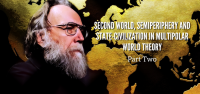
Let us now turn to a different theory: the 'world-system analysis' constructed by Immanuel Wallerstein. Wallerstein, an exponent of the Marxist school of International Relations (especially in its Trotskyist interpretation), on the basis of the doctrine of "the long run" (F. Braudel) and the Latin American theorists of structural economics (R. Prebisch, S. Furtado), developed a model of world zoning according to the level of development of capitalism. This view represents a development of Vladimir Lenin's ideas on imperialism as the highest stage of development of capitalism, according to which the capitalist system naturally gravitates towards globalisation and the spread of its influence over all humanity. Colonial wars between the developed powers are only the initial stage. Capitalism is gradually realising the unity of its supranational goals and forming the core of world government. This is fully consistent with liberal International Relations theory, where the phenomenon of 'imperialism', critically understood by Marxists, is described in apologetic terms as the goal of a 'global society', the One World.

The “New Right” is an ensemble of intellectual movements that appeared in 1968 as a reaction to ideological crisis and the strengthening of liberal hegemony in Europe. By 1968, the classical “rightwing” movements were riddled with liberal ideological motives, such as the adoption of capitalism, pro-American sentiments, and statism. In turn, the “left-wing” agenda, the core of which was constituted by opposition to capitalism [1], was also affected by liberal influences. Egalitarianism, individualism, the negation of differences between cultures, and universalism were rendering “left-wing” movements allies and partners of the liberal doctrine.

【导读】 爱女杜金娜8月不幸遭恐袭身亡后,俄罗斯哲学家亚历山大•杜金近况如何?作为一些欧美媒体疯传的“普京大脑”、“俄罗斯智囊”、“国师”,他究竟如何看待当下的俄乌冲突与俄罗斯现状?对于自己与普京的关系,他是怎么评价的?他如何看待中共二十大之后中国的未来?对中国年轻一代有哪些建议? 10月21日,中国人民大学重阳金融研究院执行院长王文得到杜金之邀,在其办公室与他交谈了一个小时。现将两人对话梳理如下。摘要版刊于环球时报,原版授权观察者网刊用。
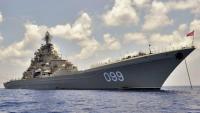
A Rússia é um país enorme que abrange todo um continente e, portanto, é muito difícil mudar sua dinâmica por causa de sua inércia. Entretanto, seria absurdo permitir que esta inércia nos conduzisse ao abismo. É por isso que as reformas (e outras emendas que precisam ser feitas) são muito difíceis de serem feitas.
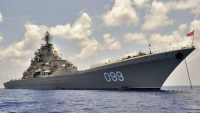
Rusia es un país enorme que abarca todo un continente y por eso resulta muy difícil cambiar su dinámica debido a la inercia que tiene. Sin embargo, resultaría absurdo permitir que esta inercia nos lleve al abismo. Es por eso que las reformas (y otras enmiendas que deben hacerse) resultan muy difíciles de hacer.

El propósito de este artículo es examinar la figura del "Anticristo" y el campo semántico del "fin de los tiempos" sin referencia a ninguna tradición religiosa en particular.

Rusia lanzó la operación militar especial en Ucrania con la intención de defender su soberanía. Mientras tanto, Occidente ha decidido usar a la nación ucraniana – sí es que puede ser llamada así – como un proxy para detener a los rusos. El predominio militar, económico y formal de Occidente es algo obvio. Sin embargo, Occidente no es solo una estructura política, económica y militar, sino una civilización que tiene un código de programación particular. Este código es el que se convierte posteriormente en armas militares o sistemas económicos, políticos, culturales, educativos, comunicativos, etc… El problema actual subyace en que Rusia debe luchar en contra de este código que da vida a Occidente.

文 亚历山大·杜金 俄罗斯政治学者,普京的哲学家
译 余烈
乌克兰问题的全球性影响
乌克兰正决定着世界秩序的命运。这并非一场尚未分割什么的、两个国家之间的局部冲突,而是一个根本性的历史分水岭。
通常的做法是将利益与价值观分开看待。利益,与政治和地缘政治力量的平衡有关,价值观,则与人类文明的理想有关。没有任何军事冲突不包含这两个方面——价值观问题和务实的目标。在乌克兰这一事件中,这两个方面——利益和价值观——本质上都是全球性的,并会直接影响到世界上每一个人。这并非一场局部冲突。
乌克兰错过了建立国家的机会

乌克兰问题的全球性影响
乌克兰正决定着世界秩序的命运。这并非一场尚未分割什么的、两个国家之间的局部冲突,而是一个根本性的历史分水岭。
通常的做法是将利益与价值观分开看待。利益,与政治和地缘政治力量的平衡有关,价值观,则与人类文明的理想有关。没有任何军事冲突不包含这两个方面——价值观问题和务实的目标。在乌克兰这一事件中,这两个方面——利益和价值观——本质上都是全球性的,并会直接影响到世界上每一个人。这并非一场局部冲突。
乌克兰错过了建立国家的机会
乌克兰代表着什么?乍一看,乌克兰是一个民族国家,(大概)有自己的理性利益,自己的民族价值观和理想。相当程度上,乌克兰是在近期才有机会成为一个国家的——这是因为苏联解体了。

从意识形态的角度看,20世纪90年代发生了弗朗西斯•福山和塞缪尔•亨廷顿之争,全世界至今仍受其影响。无论两位论者的观点受到了怎样的批评,这些观点的重要性都一直未减,因为当时两人讨论的两难问题至今犹存,这些问题仍然是世界政治和意识形态方面的主要议题。
我要提醒大家的是,伴随着华沙条约组织的崩溃和随后苏联的解体,美国政治哲学家弗朗西斯•福山提出了“历史的终结”这一观点。这种观点基于这样的想法,即在二十世纪——特别是在法西斯主义被击败之后——历史的逻辑被简化为两种意识形态的对抗:西方自由主义对抗苏联共产主义。未来以及历史的意义取决于他们对抗的结果。
后来,根据福山的说法,未来已经到来。那一刻是1991年苏联解体,自由主义者在莫斯科掌权,他们承认西方拥有更好的意识形态。因此得出了“历史的终结”这一观点。根据福山的说法,历史是战争(冷战或热战)、冲突和对抗的历史。在XX世纪下半叶,所有的对抗和战争都被简化为奉行自由资本主义的西方与共产主义东方的对立。当东方崩溃时,矛盾消失了。战争停止了(正如福山所想)。因此,历史结束了。

【导读】 单极秩序和全球化的基础是西方能把乌克兰分离出来。总之,要是俄罗斯和乌克兰用任何方式联合起来,单极秩序就要终结,地缘政治地图将根本改变。

今日俄罗斯的行为,被不同声音解释着,其中有一个不容忽视的名字——亚历山大·杜金。他被称为“普京的军师”,奉行的“新型民族主义”孕育了普京的战前演讲,他们的观念“根植于伟大的俄罗斯帝国传统的主权、价值和信仰”。
2017 年前往俄罗斯采访时,杨潇见到了亚历山大·杜金及其他几位俄罗斯知识分子,写下《在晚期》。文章还原了苏联晚期和 1990 年代转型的具体面貌,也预见今天的现实,可以说俄罗斯如今的脆弱和野心都映照出那段历史打下的投影。在下面摘选的部分中,我们将读到杜金如何在学生时代因叛逆而接触到边缘思想,一小群人的呓语又如何在转型阵痛中一步步碰到现实土壤,最终进入了俄罗斯的主流话语。

目前俄罗斯与西方的关系危机同天然气、石油、能源或通常的经济没有关系。像丹尼尔•耶金那样试图用“奖品”理论来解释政治是徒劳而肤浅的。(译注:丹尼尔•耶金是美国作家,他写了一部名为《奖品》的书,介绍石油和权力、财富的关系。)我们正在处理文明和地缘政治进程,在这些进程中,经济和能源问题是次要问题,它们只是被借用的工具。

目前俄罗斯与西方的关系危机同天然气、石油、能源或通常的经济没有关系。像丹尼尔•耶金那样试图用“奖品”理论来解释政治是徒劳而肤浅的。(译注:丹尼尔•耶金是美国作家,他写了一部名为《奖品》的书,介绍石油和权力、财富的关系。)我们正在处理文明和地缘政治进程,在这些进程中,经济和能源问题是次要问题,它们只是被借用的工具。
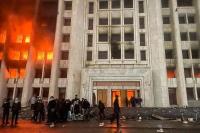
哈萨克斯坦大规模骚乱的起因,是天然气价格暴涨。但是,外国势力很快介入,在哈萨克斯坦国内有大量西方背景的非政府组织乘机发难,把社会经济问题转变为政治问题。
在这场骚乱的地缘政治目标中,美国最看重的是在中俄两个国家的“大空间”附近制造一个不稳定的热点(卡尔·施密特提出的“大空间”相当于势力范围)。抗议者中迅速出现伊斯兰激进分子就是证明。抗议浪潮在几天里,就从扎瑙津扩展到哈萨克斯坦的多个南方城市,最后汇集到阿拉木图。这说明抗议是有幕后组织的,还很符合吉恩·夏普(美国颜色革命教父)的理论指导。
在境外的逃亡寡头和反对派头头穆赫塔尔·阿布利亚佐夫和西方情报机构密切合作,他宣布要在1月5日搞一次总抗议,还建立了夺权总部。阿布利亚佐夫自封为“反对派领导人”,激烈指责中哈关系和俄哈关系。在此之前,阿布利亚佐夫就指责中国在哈萨克斯坦“扩张影响”,还从境外操纵过阿拉木图、努尔苏丹、乌拉尔、奇姆肯特、阿克托别等地的反中活动。
今天,在乔·拜登的新保守主义和极端全球主义政府的领导下,俄罗斯和美国之间的关系非常紧张,人类并非处于冷战(长期以来这一直没有停止)的边缘,而是处于核战争、第三次世界大战的边缘。主要的麻烦是乌克兰。
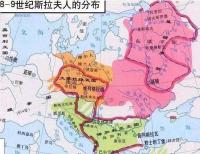
在外国观察家看来,这两个民族有来自基辅罗斯的共同祖先,他们有血缘关系,都信奉东斯拉夫的东正教,所以他们之间的冲突是一种奇怪和不可理解的事情。
这表明,有第三种力量参与了这场冲突——也就是那些美国人,他们试图让这两个兄弟民族相互对立,并通过支持其中一方——乌克兰,来打击俄罗斯,而普京总统的爱国主义改革正让俄罗斯回归历史。
在俄罗斯和乌克兰的关系中,有几个因素在外部观察者眼中并不是非常清晰。
【文/ 观察者网专栏作者 杜金 译/ 观察者网 傅洛拉】
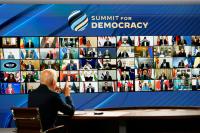
12月9-10日,由美国总统乔·拜登发起的所谓“民主峰会”召开,有110个国家或地区参加,而全球国家的数量总共为197个,不应低估此事件的意味。
在目前拜登当政的时期,我们正在应对美国新保守主义者试图让单极世界存续下去的企图。举行这次峰会是为了让单极模式和美国霸权具有表面上的合法性。
非洲是未来发展关键
非洲大陆吸引了世界各大国的注意。根据目前人口趋势,非洲人口在全球占比将快速增长。非洲代表未来,是全球未来发展的希望。
现在54个非洲国家总计占全球GDP 3%,但人口占 17%。非洲一半人口在20岁以下,而全球平均水平是30岁。随着人口增长,非洲国家GDP也会持续增长。过去10年,非洲总GDP增长1.5倍。非洲也是多种自然资源的宝库,煤炭、石油、天然气、锰矿、铜矿、铁矿、铝矿。这些攸关未来世界经济的发展。