

Christian Metaphysics: The Essence of the Problem
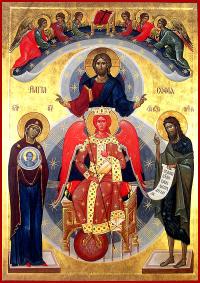
Christianity is that tradition whose metaphysical dimension has been studied least of all. This is quite a paradox since one would think that such a deep study of Christianity, the religion of the West, would attract all those interested in metaphysics and who, following Guénon, are trying to make sense of the most profound aspects of Tradition. Nevertheless, the disputes surrounding Christianity in Traditionalist circles are, as a rule, limited to fairly secondary, practical issues regarding the virtual initiation of the sacraments, the absence of an idea of cyclical time, etc. In all of this, one can see a tacit consensus among Traditionalists that Christianity is nothing more than a reduced, incomplete tradition whose esotericism has been practically lost, and whose metaphysical content cannot be detached from the dense veil of exoteric scholastic theology and the hazy subjective intuitions of mystics. All attempts to identify any consistency between the basic principles of Christianity and the conceptual categories of other, more metaphysically developed traditions (primarily Hinduism) have yielded rather poor results and have been based on strained interpretations and biased urges to arrive at any cost at conclusions which match Guénon’s own ideas.
Orthodoxy, for its part, despite having preserved ontological and metaphysical wholeness, from a certain time onward could no longer assert its metaphysical content (i.e., actual Christian metaphysics) in clear categories. Shortly after the “Palamite disputes” when Orthodox esotericism experienced its last dazzling rise in history, this line was somewhat marginalized and “frozen”, as priority was given to the exoteric sides of the Church. In the late 19th and early 20th centuries, many Russian theologians and even secular philosophers, intuitively surmising the special metaphysical nature of Orthodoxy, attempted to formulate certain principles for reviving the forgotten dimension of this tradition. However, most of these attempts did not yield serious results since none of them were familiar with the works of Guénon. Hence why only now, in our opinion, is it possible to acquire adequate knowledge of the most important proportions of the structure of fully-fledged metaphysics.