What is wrong with Europe?

Geopolitically Europe is today atlanticist entity. The geopolitics imagined by Englishman Sir H. Mackinder declares that there are two type of civilizations – the civilization of the Sea (Seapower) and the civilization of the Land (Landpower). They are constructed on the opposite systems of values. Seapower is purely merchant, modernist and materialist. The Landpower is traditionalists, spiritual and heroic. That dualism corresponds to the pair of Werner Sombart concept – Händlres and Helden. Modern European society is fully integrated in the civilization of Sea. That is manifested in the North-American strategic hegemony and in the NATO.

This situation prevents Europe from becoming independent geopolitical entity. More profoundly it perverts the geopolitical nature of Europe as continental entity – Landpower.

So there is a need to change the situation and to restore the Landpower strategy based on the real European sovereignty. Instead of atlanticism Europe need to become continental strategic power.

SATAN AND THE PROBLEM OF PRECEDENCE

The words that became the title of this lecture appeared in my consciousness as something in themselves. Not so much the idea as the formula: Satan and the problem of antecedent. It seems to me that this should be anything but a simple statement of something long known, is understandable. Many things in the process of preparing this lecture, I myself have been not completely clear. I hope that in the process of narration (from my side, with your – in the process of listening, that is, complicity) but there is a lot I can find out. Some things, so to speak, hanging in the air, and perhaps they will be formulated in the here and now. New The University (unlike the old) suggests spontaneous cognition, spontaneous epistemological grasp certain things, not specified initially. The main thing may (and should!) born at the time of presentation, in the process of focusing on certain aspects of a given topic.

The idea is to read such a lecture occurred to me two months ago, but only last night I decided to lay something on paper. Outlined and set number: 11 November 1998. This is a very “serious” date. Those who listened to the replay of “Finis Mundi”, is devoted to the Jean Parvulesco, remembers probably enigmatically passage associated with November eleventh. There is an opinion that on November 11, 1962 – birth of the Antichrist. Wrote about this famous doctor Bataille, in his book “the Devil in the XXI century”. Dr. Bataille was an employee and colleague of Leo Taxil, the largest conspiracy and hoaxer. The taxil at first (when I was a Freemason) created the concept of a conspiracy of the Jesuits, then (when he went to work at the Vatican) – the concept of a conspiracy of Satanists. He was a brilliant, extremely witty writer, a talented conspiracy, adventurer. Made a lot of money and fame. And then, suddenly, the Taxil States that all written by him and Dr. Bataille (“literary Negro”, famously “unmasked” under the leadership of Taxil masons, Jewish masons, Satanists, the palladists and other dark forces) is not more than a clever hoax. It turned out that several recent papal bull relied on, to put it mildly, not quite proven facts. Clerical Europe just didn’t want to believe it.

The Relevance of Russian Tradition

Though he prefers not to dwell on it, Dugin alludes to the possibility that the attractions of the West will win out, that Putin lacks the resources or even the will to thwart liberalism.  In this regard, other Russia observers have even raised Thomas Molnar’s concept of the “counterrevolutionary hero”—an archetypal figure who is not really counterrevolutionary, and who will inevitably disappoint right-wing followers drawn to his personality and mystique.  The anxious handwringing of liberals notwithstanding, it’s conceivable that Putin may in the long run prove their best friend by letting down the very patriotic base that elevated him to power.  The legacy of Charles de Gaulle comes to mind, as does Reagan’s.

Then again, liberals have put their cards on the table awfully soon, and may have backed Russia into a corner.  It would be foolish to continue appeasing Western elites who have time and again demonstrated an insatiable appetite for regime change—and whatever else one may say of Putin, he is no fool.  Hawkish rhetoric and overtly perverse policies on behalf of queer power may backfire, pushing the Russian state toward the pursuit of consciously and assertively antiliberal empire.  This is precisely what Dugin wants: If Western liberal hegemony provokes Russian-led counterhegemony, a multipolar, postliberal world system may arise.

Mind Games: Alexander Dugin and Russia’s War of Ideas

While the EEU fulfills the economic, political, and symbolic goals of Eurasianism, Putin’s agenda can change without seriously affecting Dugin’s mission. He has the diversionary task of filling ideological vacuums created around the world by suspicion and skepticism regarding the United States, the European Union, and other liberal powers. Dugin’s ideology already resonates with both high intellectuals and the conspiratorial fringe. His ideas seem tailor-made to exploit continuing economic stagnation, distrust of EU bureaucracy, anxiety at the continuing influx of immigrants, and, crucially, the anxiety of those immigrants themselves, who fear the assault on their traditions that comes as a part of their resettlement in the West.

Dugin is also obviously intent on maximizing the potential of his ideology through various political, intellectual, and social media networks. He has met with members of the French military who are critical of President François Hollande, the US, and NATO, discussing topics as diverse as preparations for the French intervention in Mali, cyber warfare, terrorism, and friction between China and the US. He has called for even closer ties between Russia and Iran, already united in their subjection to US-led sanctions and their support for Syria. But his crowning achievement is to have become the spokesman for a systematic anti-liberalism that has allowed Vladimir Putin to advance not as an unprincipled tyrant but as the representative of an international philosophy whose writ stretches from the backwaters of Russia to the capitals of Europe.

Who is Aleksandr Dugin?

Aleksandr Dugin has come to public attention as “Putin’s Brain,” as Foreign Affairs memorably dubbed him – that is, as the ideological mastermind behind Russia’s moves towards reasserting imperial ambitions, notably with respect to Ukraine. Is this accurate, or is it just media hype? The truth is that it’s extremely difficult to judge with confidence exactly to what extent Vladimir Putin’s more aggressive policies towards, for instance, Ukraine reflect Dugin’s influence (or supposed influence) as an omnipresent publicist and behind-the-curtain advisor to aspiring czars. (The suspicion easily arises that Putin uses Dugin – lets him rant on state TV – without himself buying into the crazy worldview.) But whether Dugin really is influencing Russian policy or is simply the object of excessive hype, either way intellectuals as well as ordinary citizens in the West need to be aware of him, lest they be taken in by his pretensions as a theorist and his claimed interest in civilizational dialogue and pluralism, which functions as a rhetorical cloak. Either way, he’s dangerous.

 
4pt

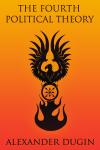
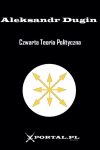
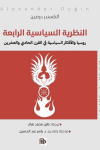
ALEKSANDR DUGIN: THE FOURTH POLITICAL THEORY

The principal aim of Professor Dugin's work is not simply to deconstruct the previous failed political theories, which he lists as fascism, communism, and liberalism, but to fashion a new fourth theory, utilising what may be learnt from some of the previous models after their deconstruction rather than dismissing them outright on the basis of particulars worthy of rejection. That is not to say that the Fourth Political Theory is simply a synthesis of ideas that in their singular form have seen their day. Dugin is conscious of the necessity to bring something new to the table, with one of the principal of these novel ideas being the rejection of the subjects of the old ideologies, such as class, race, or the individual, in favour of the existential Heideggerian concept of Dasein (roughly Being or being-in-the-world. Literally da – there; sein – being) as the primary actor.

Arguably this is the greatest difficulty in Professor Dugin's book. Whereby the subject of class or race may be conceived of on the scientific, quantifiable level, the metaphysical idea of Dasein as the cardinal actor in the Fourth Political Theory is significantly more difficult to grasp in an age which overvalues the scientific method. This said, the title of the book itself serves to suggest that the contents will not be free from abstract concepts. This is, after all, a work of theory.

4pt

THOUGHTS ON DUGIN'S "EURASIAN MISSION"

Along with the more geopolitical aspects, the Fourth Political Theory lies at the heart of Eurasianism, and constitutes its philosophical core. Drawing its roots from France's New Right, the Third Way, the German Conservative Revolution, and thinkers as diverse as Heidegger, Boaz, Evola, and de Benoist, the Fourth Political Theory could be summed up by what Alain Soral calls "la gauche du travail et la droite des valeurs" ("the worker’s left and the moral right"). It is important to note that, just like Alain Soral, Dugin rejects ethnocentrism. The Fourth Political Theory rejects not only liberalism (capitalism), but also communism (socialism) and fascism, preferring a blend of the two non-capitalistic systems in order to prevent each one’s particular shortcomings.

Even though it believes in multipolarity, Russia is central to Eurasianism, as is the goal of creating a "European Space," encompassing both Europe and Russia. The objective is clearly to shift the balance of global power from Washington to Moscow, although Dugin denies this in an interview with Arktos published at the end of the book. 

American Dasein: The USA and Deep Identity in The Multipolar World

What struck me on arriving in the US was the interest in and presence of other cultures, especially in relation to spirituality. Spiritual, New Age and occult centers (or at least bookstores) existed and seemed relatively vibrant. Religion was also far more important than in England, whether that was Christianity, Judaism, Tibetan Buddhism, or something else. There was (and of course still is) a big Chinatown, where Chinese was spoken (London’s is tiny). I practiced Kung fu in the early morning at a park in Chinatown and went for tea at a Chinese place afterward; I went to read in a French cafe that was always empty and the owners were actually French; I went to the spiritual and occult bookstores; to the museums, to Japanese events with my Japanese friends; and so on. Moving to the US, my life was steeped much more consciously in the archaic and the “Traditional” than in the much older culture of England.

Capitalism, of course, always seizes on what is different and exciting, and repackages it for the mainstream, often destroying the culture-creating roots as a consequence. But, if we leave aside this aspect, and get back to the people, America’s history is one with as much depth as anywhere else. Indeed, while Britain and Europe ape the most crass aspects of the USA, Americans often look to something more integral.

The Fourth Political Theory & Blind Western Liberalism

Alexandr Dugin - Hour 1 - The Fourth Political Theory & Blind Western Liberalism

March 27, 2015
Aleksandr Dugin is one of the best-known writers and political commentators in post-Soviet Russia. In addition to the many books he has authored on political, philosophical and spiritual topics, he currently serves on the staff of Moscow State University, and is the intellectual leader of the Eurasia Movement. For more than a decade, he has also been an advisor to Vladimir Putin and others in the Kremlin on geopolitical matters, being a vocal advocate of a return of Russian power to the global stage, to act as a counterweight to American domination. Dugin joins us to speak about the subject of his book, The Fourth Political Theory. He begins with an overview of this political vision, one that is a fundamental criticism of liberalism in all forms, but does not fall into communism, nationalism or fascism. Dugin explains the need for critically thinking people in the world to imagine an alternative to liberalism, and how this very confusing and destructive ideology is truly a totalitarian way of thinking. We consider the key liberalist issues as being tests to see how far people are willing to go to completely give up traditional values, and we look at the globalist capital system that is exacerbating the identity crisis of the west. In the second half, Dugin details the fine points of Eurasianism, a vision of world history based on geopolitics and the virility of diverse civilizations. We look at Russia’s place amongst the global elite, her unwavering sovereignty that will ultimately resist globalization, and a deeply rooted cultural dimension that cannot be divided from Europe. Dugin speaks of the US’s constant meddling and manufacturing of conflicts between Russia and Europe, and we discuss the importance of creating a strong European cooperative to balance the liberalist power monopoly. In conclusion, Dugin notes his contributions to Putin’s current ideology and the rising influence of the Forth Political Theory in liberating Russia from the globalist grip.

http://www.redicecreations.com/radio/2015/03/RIR-150327.php

Maoism is too Modern for me

I defend the plurality of civilizations, the absence of the universal (Western) pattern of social development. I strongly oppose any kind of xenophobia and nationalism as the bourgeois artificial and essentially Modern construction. 
I am not communist nor Marxist because I refuse the materialism of any kind and deny the progress. So much more correct to describe my views as Fourth Political Theory and traditionalism. 

Mao was right affirming that socialism should be not exclusively proletarian but also peasant and based on the ethnic traditions. It is closer to the truth than universalist industrial internationalist version represented by trotskyism. But I think that sacred part in Maoism was missed or underdeveloped. Its links with Confucianism and Taoism were weak. Maoism is too Modern for me. For China it would be best solution to preserve the socialism and political domination of national-communist party (as today) but develop more sacred tradition –  Confucianismand Taoism. It is rather significant that ideas of Heidegger are attentively explored now by hundreds of Chinese scientists. I think Fourth Political Theory could fit to contemporary China best of all.

4pt

The Clashing Dance – Dugin-Fukuyama-Krastev's Meeting

Fukuyama's main tenets

never getting to the core of things – "We [USA] are not good at democratizing countries". But then again, who in the world asked you to do that "for us"? This question has to be answered honestly—as a matter of fact, it is Paikin not asking this that proves the show to be sold in advance;

replacing truth for political correctness – "Liberal democracies don't fight each other". The idea is mischievous at least for three reasons:

the problem with this assumption relies not only in the accuracy of the claim itself (there has been wars between democracies), but also in the fact that its credo is precisely what leads to war against other kinds of regime, who are considered intrinsically a crime punishable by war; therefore, the claim recognizes its prejudicial vision of the Other as a phenomenon and legitimizes the necessity of their killing.

The Turning Point?

Russia, for its part, is seeking to implement a new geopolitical axis with Beijing and Tehran, a factor of multipolar balance of power opposed to the Atlanticist endeavors. The Chinese, after long procrastination, are no longer hiding their desire to “de- Americanize the world.”  Yet, the future of Russia, a great power, albeit still fragile, in a similar way as China, with its own inner contradictions, remains uncertain. Countries of Eastern Europe are still hesitant  as to which path to follow—all the more so as Germany is seeking to replace the former USSR as a federating factor in Eastern and Central Europe.

We are witnessing a restructuring of the forms of world domination. The United States, with its financial markets, its armed forces, its language and its culture industries remains the leading world power. Its economic impact, however, is decreasing bit by bit (its share of global industrial output has fallen from 45% in 1945 to 17.5% today), with the dollar representing today only a third of world trade in comparison to more than a half in 2000.  The process of “de- dollarization” has already and simultaneously begun, in oil and gas trading and on the monetary front. Russia and China, emulated by other Third World countries, are using more and more their national currencies in trade and investment. The project of trade in energy and raw materials, without resorting to the dollar, is beginning to take shape. Meanwhile, the purchase of gold is gathering momentum. The advent of a new international reserve currency, designed to replace the dollar, seems inevitable.

4pt

Pages